 AI Bathroom
 Bathroom Tile Patterns: 8 Layouts That Transform Any Space
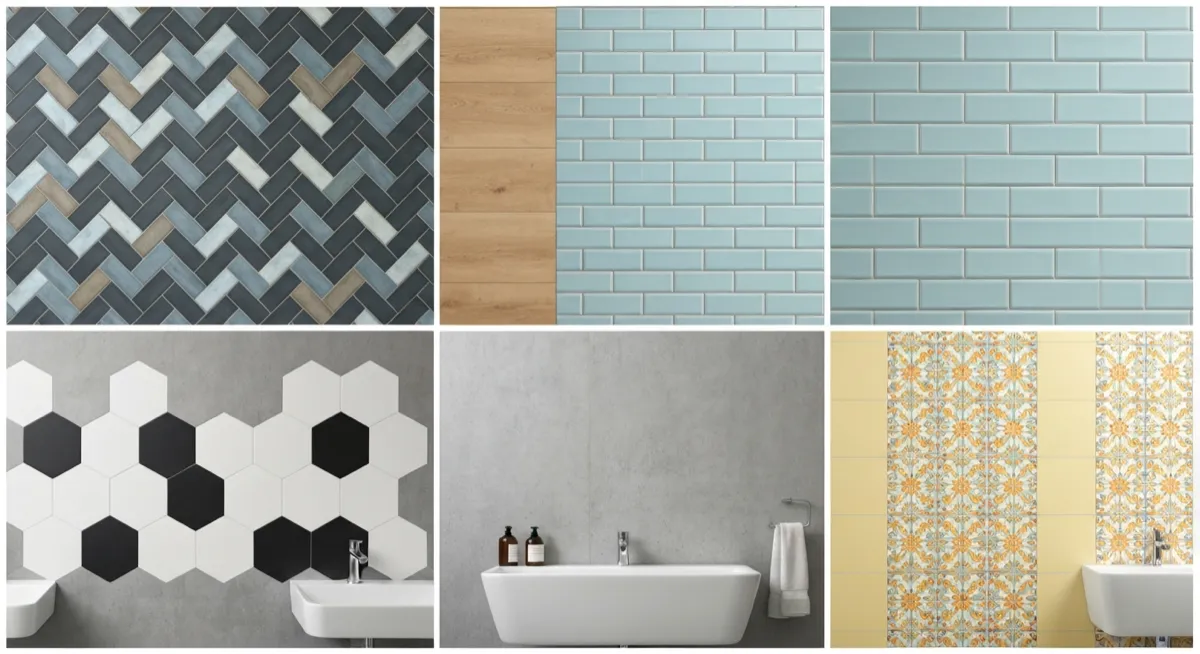
The same tile looks completely different depending on the pattern you lay it in. A basic white subway tile transforms from simple to sophisticated just by switching from a standard brick pattern to a herringbone. Here are eight patterns and when to use each one.
1. Running Bond (Brick Pattern)
The standard offset pattern used for subway tile — each tile is offset by half from the row above. It is the most common tile pattern because it is clean, timeless, and easy to install. Horizontal running bond is the default for walls. Vertical running bond (tiles running top to bottom instead of left to right) adds height and a more contemporary feel. One-third offset (each tile offset by a third instead of half) is a subtle variation that creates a slightly different rhythm.
2. Herringbone
Tiles arranged in a V-shaped zigzag pattern at 45-degree angles. Herringbone adds dramatic movement and visual interest to any surface. It works with subway tiles, rectangular planks, and even small mosaic pieces. On floors, it draws the eye along the length of the room. On walls, it creates a dynamic focal point. Herringbone requires more cuts and slightly more material (plan for 10-15% waste) compared to a running bond layout, but the visual payoff is substantial.
3. Stacked (Grid)
Tiles aligned in a straight grid with no offset — creating a clean, modern, geometric look. Stacked subway tile on walls is a hallmark of contemporary and minimalist design. It emphasizes the rectangular shape of each tile and creates strong horizontal and vertical lines. Pair with thin grout lines in a matching color for the most modern effect. Stacked patterns require perfectly level installation because there is no offset to hide imperfections.
4. Hexagonal
Six-sided tiles that interlock like a honeycomb. Large hex tiles (6-8 inches) on floors create a modern, geometric surface. Small hex tiles (1-2 inches) in white or marble are a classic vintage pattern for bathroom floors. Mix black and white hex tiles for a dramatic vintage look. Hexagonal tile is particularly popular for shower floors because the many grout lines provide excellent slip resistance.
5. Chevron
Similar to herringbone but with a key difference: chevron tiles are cut at an angle so the V-shapes form a clean, continuous zigzag line, while herringbone uses rectangular tiles that create a broken zigzag. Chevron creates a sharper, more directional pattern. It works beautifully on accent walls and shower floors.
6. Basketweave
A classic pattern where pairs of rectangular tiles alternate between horizontal and vertical orientation, creating a woven appearance. Basketweave is most often seen in marble floor tile and evokes traditional, high-end design. It adds subtle texture and movement without being as busy as herringbone.
7. Large Format Minimal
Oversized tiles (24x48, 32x64, or even larger) installed with 1/16-inch grout lines create an almost seamless surface. The fewer grout lines make rooms feel larger and surfaces easier to clean. This is the dominant trend in contemporary bathroom design. Large format works best in neutral tones — bold colors or strong patterns in oversized tiles can overwhelm a small bathroom.
8. Mixed Patterns
Combining two tile patterns in one bathroom creates visual zones that make the space more interesting. A common approach: hexagonal tile on the floor with subway tile on the walls. Or large format on the main walls with herringbone in the shower niche. Keep the color palette unified and limit yourself to two patterns to avoid visual chaos.
Preview Patterns in Your Space
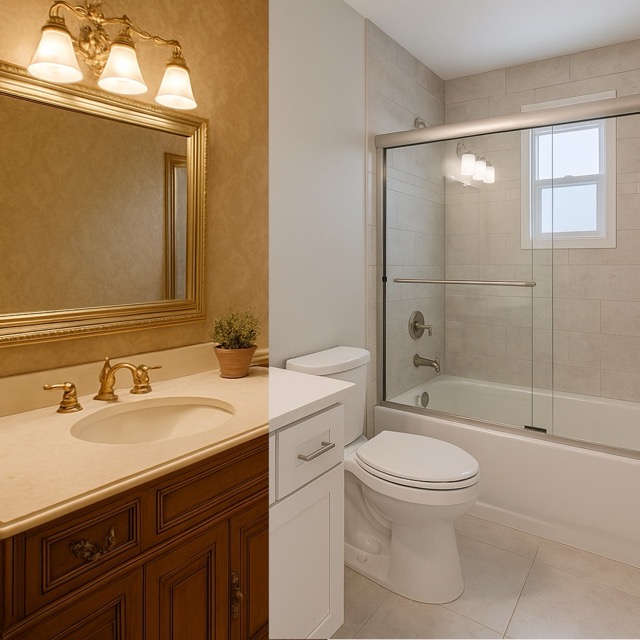
Tile pattern changes the entire feel of a bathroom, and it is very difficult to visualize from a small sample square. Upload a photo of your bathroom to an AI design tool and test how different patterns and tile sizes look on your actual walls and floors before committing.
Frequently Asked Questions
What tile pattern makes a bathroom look bigger?
What is the most timeless tile pattern?
Can you mix tile patterns in a bathroom?
Visualize Your Dream Bathroom
Upload a photo of your current bathroom and see it transformed with AI. Try different styles, tiles, and fixtures instantly.
Start Designing Free